
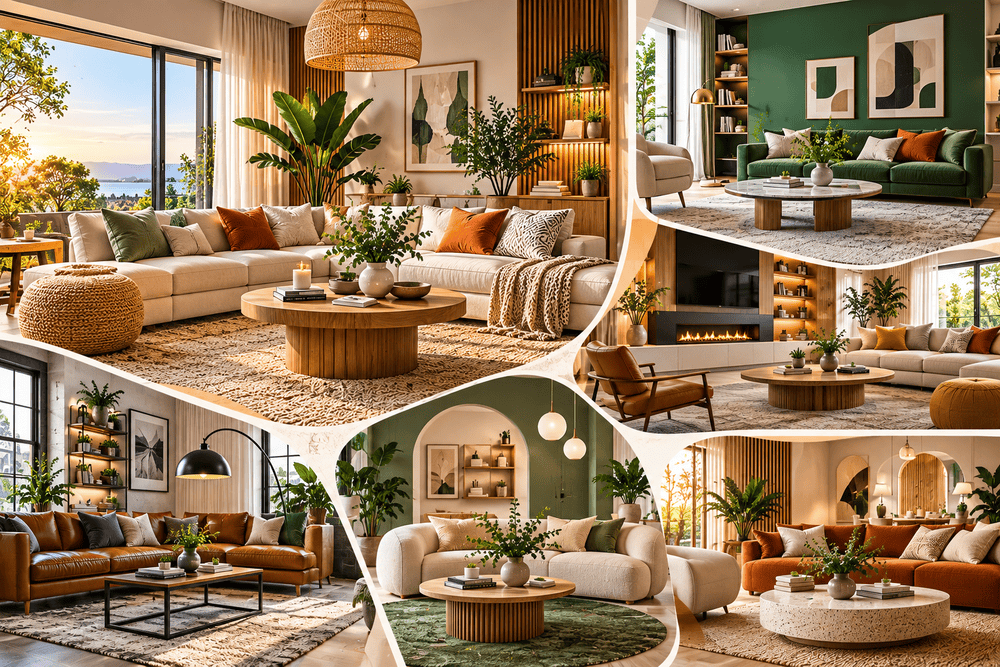
Your living room tells people who you are before you say a single word.
It is the first room guests see when they visit. It is where your family gathers at the end of the day. It is where you relax, entertain, read, watch films and spend the majority of your time at home. Getting it right matters more than any other room in the house.
But here is the thing about living room interior design ideas there is no single right answer. The perfect living room is not the one that looks most like a magazine spread. It is the one that works for your life, reflects your personality and makes you genuinely happy every time you walk into it.
In this guide I am sharing 50 living room interior design ideas across every style, size and budget. Whether you are working with a small apartment in Mumbai, a family home in London or a spacious villa anywhere in between you will find ideas here that are practical, beautiful and genuinely achievable.
Modern and Minimalist Living Room Ideas
Modern minimalist design is the most searched living room style for good reason. When done well it creates spaces that feel calm, spacious and effortlessly sophisticated. The key principles are clean lines, a neutral colour palette, functional furniture and the discipline to keep only what you genuinely need.
Build your palette around white, warm grey and natural wood
The foundation of any great modern living room is a restrained colour palette. White walls create a sense of space and light. Warm grey accents add depth without heaviness. Natural wood tones add warmth to the room. Use them in flooring, furniture legs or a coffee table. This is one of the most timeless modern living room decor combinations available.
Choose a sofa with clean lines and visible legs
The sofa is the most important piece of furniture in any living room. For a modern minimalist look, choose a sofa with a low profile and straight arms. Visible legs are better than a sofa that sits directly on the floor. The visible legs create a sense of lightness and make the room feel larger.
Use a single large piece of wall art instead of multiple smaller pieces
One oversized piece of art can make a strong design statement. It is also easier to arrange than a gallery of smaller pieces. Choose something with meaning to you rather than something purely decorative.
Add texture through materials rather than colour
In a neutral palette texture is what prevents the space from feeling flat and boring. Combine a linen sofa with a wool throw, a jute rug and velvet cushions. The variety of textures creates visual interest without introducing competing colours.
Keep surfaces clear
Nothing undermines a modern minimalist living room faster than cluttered surfaces. Be ruthless about what sits on your coffee table, side tables and shelves. A single object placed deliberately creates more impact than ten objects placed randomly.
Use floor to ceiling curtains to add height
Hanging curtains as close to the ceiling as possible even if your windows are not particularly tall creates the illusion of higher ceilings and makes the room feel more generous. Use linen or cotton in a colour close to your wall colour for a seamless, elegant effect.
Choose multi-functional furniture
In a modern living room every piece of furniture should earn its place. Choose furniture that serves more than one purpose. A coffee table can have hidden storage. A sofa can include a pull-out bed. An ottoman can provide storage and extra seating.
Layer your lighting with three sources
Overhead lighting alone creates a flat, office-like atmosphere. Layer your lighting with three sources. Use ceiling or recessed lights for general lighting. Add a reading lamp beside the sofa. Use candles, a floor lamp or LED strips for accent lighting.
Add a single statement plant
A large indoor plant a fiddle leaf fig, a monstera deliciosa or a snake plant brings life and organic shape to a space that might otherwise feel too structured. One large plant makes a stronger statement than several small ones scattered around the room.
Keep your television integrated rather than dominant
The television is a necessary feature of most living rooms but in a minimalist space it should not be the visual focal point. Mount it flush against the wall, run the cables invisibly through the wall cavity and build a simple media unit around it that keeps equipment and cables out of sight.
Small Living Room Ideas
Small living rooms are one of the most common design challenges and one of the most satisfying to solve. The goal is not to make the space look bigger it is to make it feel better to live in.
Use light colours on walls and ceiling
Dark colours absorb light and make a small room feel smaller. Light colours such as white, pale grey, soft cream and pastel tones reflect light. They can make the room feel more open. Paint both the walls and ceiling in the same light colour to remove the visual interruption of the ceiling line and make the room feel taller.
Choose a sofa that fits the scale of the room
One of the most common mistakes in small living rooms is choosing a sofa that is too large for the space. A large sectional sofa may be your dream piece. However, it can dominate a small room and make it feel cramped. Choose a sofa scaled to your room typically a two-seater or a compact three-seater and leave adequate circulation space around it.
Use mirrors strategically
Place a large mirror opposite the main light source. It reflects light and makes the room feel larger. A full-length mirror leaning against a wall, a large circular mirror above the sofa or a set of smaller mirrors arranged as a gallery wall all work effectively in small living rooms.
Choose furniture with legs rather than solid bases
Furniture that sits on legs sofas, chairs, coffee tables and side tables allows light to pass underneath and creates a sense of visual lightness. Furniture with solid bases that extend to the floor feels heavier and takes up more visual space even when the footprint is identical.
Use vertical space for storage
In a small living room floor space is precious. Build upward rather than outward by installing floor to ceiling shelving or bookshelves. This provides substantial storage and display space without reducing the floor area available for furniture and movement.
Choose a glass coffee table
A glass or lucite coffee table occupies physical space but not visual space. You can see through a glass table, so the room feels less cluttered. It can also feel more open than with a solid timber or stone table.
Use a single large rug rather than multiple small ones
A rug that is too small for the space a common mistake makes the room feel fragmented and actually makes it look smaller. A single large rug that extends under all the main furniture pieces ties the seating area together and makes the room feel more intentional and spacious.
Keep window treatments simple and light
Heavy curtains that block light are the enemy of a small living room. Use sheer curtains or simple roller blinds that allow maximum light in while still providing privacy. If you do use curtains hang them as close to the ceiling as possible and let them fall to the floor.
Choose a wall-mounted television
Mounting your television on the wall rather than placing it on a unit eliminates a substantial piece of furniture from the room and frees up significant floor space. Pair it with a simple floating shelf below for your devices and remotes.
Use built-in storage around the fireplace or television
Built-in shelving and cupboards are useful in a small living room. Place them around the fireplace or television to save space. They use what is typically dead space, provide substantial storage behind closed doors and can make a small room look architecturally considered and intentional.
Living Room Colour Ideas
Colour is one of the most effective and affordable tools available to any interior designer. The right colour palette can completely change how a room feels without moving a single piece of furniture.
Terracotta and warm earth tones
Terracotta has been one of the most popular living room colour ideas for the past three years. It remains popular today. It works well in both contemporary and traditional spaces. It adds warmth and depth to a room. It also pairs well with wood, rattan, linen, concrete and steel.
Sage green for calm and sophistication
Sage green is a popular interior colour of the mid-2020s. It sits between warm and cool tones. It works with natural and artificial light. It also creates a calm, grounded atmosphere. Pair it with natural wood, cream textiles and brass hardware for the most sophisticated result.
Navy blue as an accent wall
A single navy blue accent wall in a living room creates dramatic visual impact without overwhelming the space. Navy pairs particularly well with white, cream and natural linen, and works beautifully with brass, gold and warm timber accents.
Warm white for timeless elegance
Not all whites are the same. Warm whites those with yellow or pink undertones rather than blue or grey undertones create a sense of warmth and welcome that pure white cannot match. Dulux Jasmine White, Farrow and Ball’s All White and Benjamin Moore’s White Dove are all outstanding choices for a living room wall colour.
Dusty pink for unexpected softness
Dusty or muted pink as opposed to bright or saccharine pink is a surprisingly sophisticated and versatile living room colour idea. It works beautifully with grey, white, camel and forest green and creates a space that feels both contemporary and deeply comfortable.
Charcoal grey for drama and depth
A deep charcoal grey living room feels cocooning, dramatic and effortlessly cool. To prevent it from feeling oppressive pair it with white trim, plenty of soft lighting and textiles in cream, camel and warm rust tones.
Burnt orange as an accent colour
Burnt orange works brilliantly as an accent colour in cushions, throws, rugs and artwork even if you would never paint your walls in it. It brings warmth, energy and a contemporary global feel to any neutral living room.
Olive green for organic warmth
Olive green sits in that beautiful territory between warm and earthy. It works particularly well in rooms with natural light and pairs beautifully with natural materials linen, jute, timber and leather.
Pale blue for a light and airy feel
Pale blue particularly those with a slight grey or green undertone creates a sense of calm and space that makes it one of the most liveable living room colour ideas. It is endlessly versatile and works equally well in both traditional and contemporary spaces.
Go monochromatic for maximum sophistication
A monochromatic colour scheme using different tones and textures of the same colour throughout the room is one of the most sophisticated approaches to living room colour ideas and one of the most effective Choose one colour you love and explore its full range from near-white to deep saturated tones across your walls, textiles, rug and accessories.
Traditional and Classic Living Room Ideas
Not every living room needs to be minimal or contemporary. Traditional and classic interiors have endured for centuries because they are warm, comfortable and deeply human in their appeal.
Invest in a genuinely comfortable sofa
In a traditional living room the sofa is an invitation to relax rather than a design statement. Deep seats, soft cushions, rolled arms and generous proportions are the hallmarks of a traditional sofa done well. Choose natural fabrics linen, cotton velvet or wool over synthetic ones.
Use a Persian or Oriental rug as your starting point
A beautiful traditional rug is often the best starting point for designing a classic living room. Take your colour palette from the rug and build everything else walls, upholstery, curtains around its dominant and secondary tones.
Add wooden bookshelves filled with real books
Nothing creates a sense of warmth, intellect and personality in a living room quite like floor-to-ceiling bookshelves filled with real, read books. Arrange them by colour for a more decorative effect or by subject for a more functional one.
Use rich curtain fabrics in deep colours
In a traditional living room curtains are an important design feature rather than an afterthought. Choose rich fabrics velvet, damask, chenille or heavy linen in deep colours like forest green, burgundy, navy or warm gold. Line them properly and hang them from ceiling to floor.
Add a fireplace as the focal point
A fireplace real or decorative is the natural focal point of a traditional living room. If you have one make it the undisputed centre of the room by arranging your furniture around it and dressing the mantelpiece with carefully chosen objects. If you do not have a fireplace consider an electric fire or a decorative surround.
Mix antique and contemporary pieces
The most interesting traditional rooms are not museum pieces they are living spaces that mix inherited or antique pieces with more contemporary ones. An eighteenth century chest of drawers alongside a contemporary sofa, an antique mirror above a modern console these combinations create rooms with genuine character and history.
Use table lamps generously
Traditional living rooms are lit by multiple sources of soft, warm light rather than a single overhead fixture. Use table lamps on side tables, console tables and bookshelves to create a warm, welcoming glow that no overhead light can replicate.
Display meaningful objects and collections
Traditional interiors celebrate personal history and the accumulation of meaningful objects over time. Display family photographs in beautiful frames, collections of ceramics or glass, objects from travels and inherited pieces with stories behind them. These details are what make a house a home.
Budget-Friendly Living Room Ideas
You do not need a large budget to create a beautiful living room. These ideas deliver significant visual impact for minimal investment.
Paint is your most powerful tool
A fresh coat of paint is the single highest return on investment improvement you can make to any living room. A single tin of quality paint costs very little and the transformation it delivers from tired and dated to fresh and intentional is dramatic. If you can only do one thing to improve your living room paint the walls.
Rearrange your existing furniture
Before buying anything new experiment with rearranging the furniture you already have. Most people arrange their furniture against the walls which actually makes rooms feel smaller and less sociable. Try floating your sofa away from the wall and creating a more intimate seating arrangement centred on a rug or coffee table.
Add plants for instant life and colour
Indoor plants are one of the most cost effective ways to transform a living room. A large fiddle leaf fig or monstera from a garden centre, a trailing pothos on a high shelf, a group of succulents on the coffee table plants bring colour, texture, life and proven air quality benefits to any space for a fraction of the cost of any decorative alternative.
Update your cushions and throws
New cushions and a throw are the fastest and most affordable way to refresh the look of a sofa without replacing it. Choose a colour palette that either complements or intentionally contrasts with your existing sofa colour and mix textures — velvet with linen, wool with cotton.
Frame affordable art prints
Original art is expensive. But beautifully framed prints from online platforms can look extraordinary in the right frame and are available for very little. Invest in quality frames even for inexpensive prints as the frame quality has a disproportionate impact on the final result.
Upcycle existing furniture with paint
A tired wooden coffee table, a dated bookshelf or an old side table can be completely transformed with a tin of chalk paint. Chalk paint adheres to most surfaces without priming and gives a beautiful matte finish that works particularly well on wooden furniture.
Add a large mirror from a second hand shop
Second hand shops, vintage markets and online resale platforms are excellent sources of large decorative mirrors at a fraction of their new price. A large mirror makes any room feel bigger and brighter and a beautiful vintage frame adds character that a new mirror rarely matches.
Luxury Living Room Ideas
Invest in one genuinely exceptional piece
You do not need to buy expensive furniture for a luxury living room. Invest in one exceptional piece and build the room around it. A truly outstanding sofa, a magnificent rug or a spectacular light fitting can anchor a room and elevate everything around it.
Use professional quality window treatments
Nothing transforms a room from ordinary to extraordinary quite like beautifully made curtains and blinds. Invest in quality fabric, proper lining and professional making up. The difference between well-made and poorly made curtains is immediately visible and makes an enormous difference to the overall quality of the space.
Install statement lighting as a design feature
A spectacular pendant light, chandelier or sculptural floor lamp is one of the most effective ways to add luxury to a living room. Lighting at this level is functional but also purely decorative it creates a focal point, sets the atmosphere of the room and communicates a level of care and intention that elevates the entire space.
Layer high quality textiles throughout
Luxury is felt as much as it is seen. Layer your living room with high quality textiles — a cashmere throw over the sofa arm, linen cushions in varied textures, a hand-knotted wool rug underfoot, velvet curtains that pool slightly on the floor. The tactile quality of genuine natural fibres creates a sense of comfort and indulgence that synthetic alternatives simply cannot replicate.
Commission a bespoke piece of furniture or art
Nothing signals genuine luxury quite like something made specifically for you. Commissioning a piece of furniture made to your exact dimensions and specifications, or working with a local artist to create an original painting for your wall, creates a living room that cannot be replicated anywhere else in the world.
How to Choose the Right Living Room Design for You
With 50 ideas in front of you the question becomes where to begin. Here is a simple framework I use with every client.
Start with how you actually live. Do you have young children or pets? Then choose durable, washable fabrics over delicate ones. Do you work from home and need the living room to serve multiple purposes? Then prioritise storage and flexibility over pure aesthetics.
Consider your light. A north-facing room with limited natural light needs warm colours and multiple light sources. A south-facing room flooded with light can handle darker colours and heavier materials without feeling oppressive.
Be honest about your budget. Decide upfront what you can spend and prioritise accordingly. Paint and rearrangement first. New textiles and accessories second. New furniture third. Structural changes last.
Finally choose a style that genuinely reflects who you are rather than what is currently trending. Trends come and go. A living room designed around your authentic taste will feel right for years while a room designed around this month’s most popular Pinterest aesthetic will feel dated faster than you expect.
Conclusion
Your living room does not need to be perfect to be beautiful. It does not need to be expensive to be well-designed. And it does not need to look like anyone else’s to be exactly right.
The 50 home interior decoration ideas in this guide cover everything from the grandest design gestures to the smallest affordable changes. Every one of them has been chosen because it delivers genuine improvement to how a living room looks and feels to live in.
Start with what you can do today rearrange your furniture, add a plant, buy a tin of paint. Then build gradually toward the living room you actually want to come home to every day.
Design is not about perfection. It is about creating a space that makes your life better. Start there and everything else will follow.