
There is no shortage of advice about living a healthier life. The difficult part is turning that advice into something you can realistically do on a Monday morning when work is busy, meals are rushed and motivation is nowhere to be found.
That is why healthy living does not have to begin with a complete lifestyle overhaul. In most cases, the habits that stay with us are the small ones. Drinking more water, walking after dinner, eating a better breakfast and getting to bed at a reasonable time may sound ordinary, but ordinary habits repeated consistently can make a meaningful difference.
The following healthy lifestyle tips are designed to fit into everyday life. You do not have to start all 20 at once. Pick a few that feel realistic, practise them consistently and build from there.
Healthy Food Habits to Build Into Your Day
1. Eat a balanced breakfast
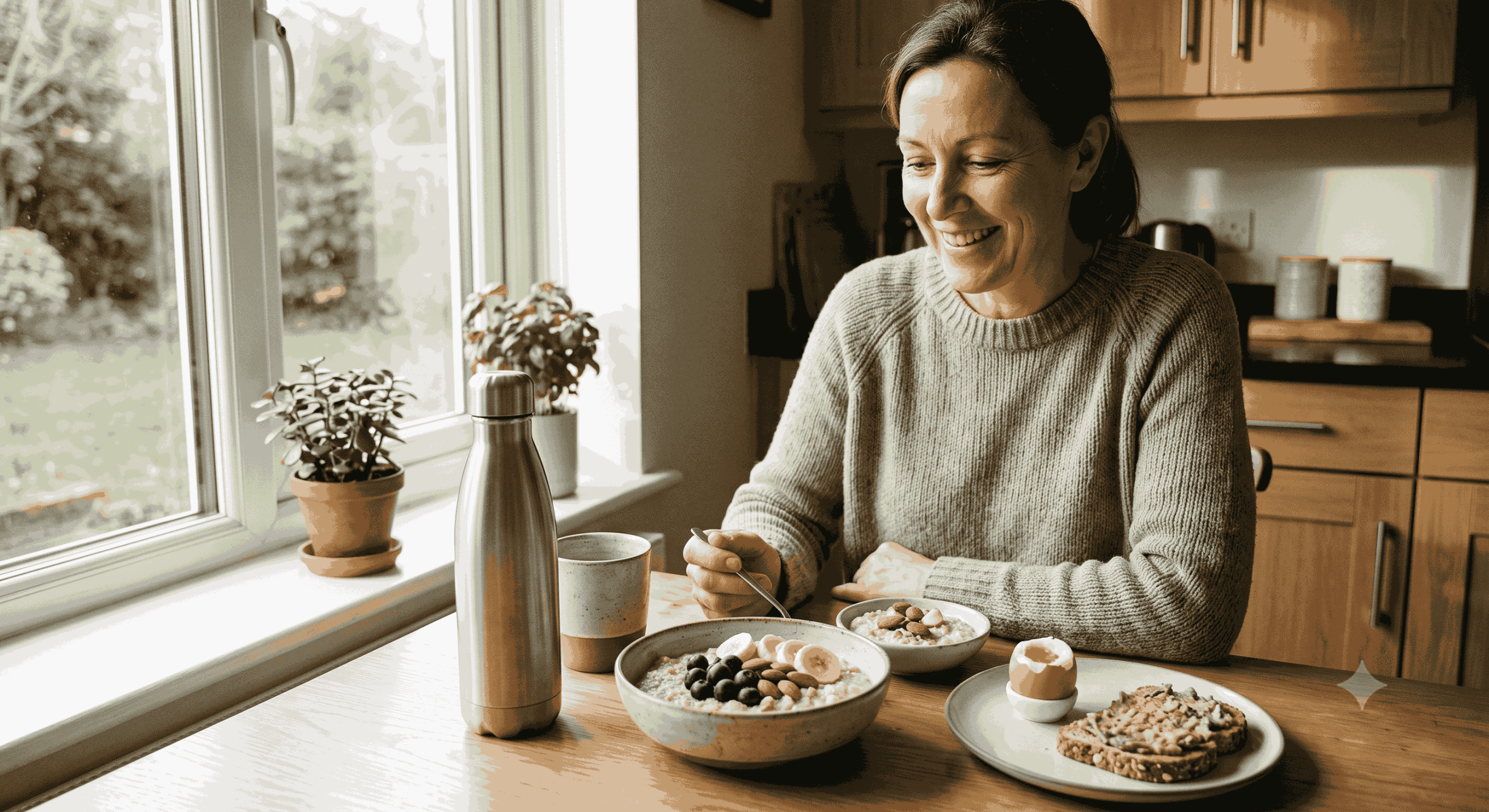
Breakfast does not have to be elaborate. A simple meal containing protein, fibre and whole foods can help you start the day feeling satisfied rather than reaching for convenient snacks a couple of hours later.
Eggs with wholegrain toast, yoghurt with fruit, oats with nuts or a vegetable-based breakfast are all simple options.
2. Include a source of protein in your meals
Protein helps make meals more satisfying and is important for maintaining muscle and supporting normal body functions.
Depending on your preferences, protein may come from eggs, lentils, beans, fish, poultry, dairy products, tofu, nuts or other foods.
3. Drink enough water throughout the day
Keeping a bottle nearby is one of the easiest ways to remember to drink regularly.
You may often hear the recommendation to drink eight glasses of water a day. Treat that as a simple reminder rather than a fixed requirement because individual fluid needs vary according to activity, climate, diet and health.
4. Replace some processed snacks with fruit or nuts
You do not need to remove every snack you enjoy. Instead, make healthier choices easier to reach.
Keep fruit on the kitchen counter. Carry a small portion of nuts when travelling. Have yoghurt or chopped vegetables ready in the fridge.
These simple healthy food habits remove some of the decision-making that often leads to convenience eating.
5. Cook at home more often
Cooking gives you greater control over ingredients, portions and preparation methods.
That does not mean every meal needs to be prepared from scratch. Even cooking a few extra portions twice a week can make it easier to avoid takeaway meals on busy days.
Daily Movement and Exercise
You do not need a complicated exercise programme to become more active. One of the most practical answers to how to stay healthy is simply to create more opportunities to move.
6. Walk for around 30 minutes a day
Walking is accessible, requires little equipment and can fit naturally into most routines.
You might walk before work, after dinner or in shorter blocks throughout the day.
7. Take the stairs when practical
Small amounts of movement add up.
Taking the stairs, walking to a nearby shop or parking a little farther from an entrance can quietly increase your daily activity without requiring a separate workout.
8. Stretch in the morning
A few minutes of gentle stretching can help loosen stiff muscles after sleep and provide a calmer start to the day.
Focus on comfortable movement rather than forcing a stretch.
9. Use simple bodyweight exercises at home
Squats, wall push-ups, lunges and other basic movements can make home exercise more accessible.
Start at a level appropriate for your ability and build gradually.
10. Break up long periods of sitting
If you work at a desk, hours can pass before you realise you have barely moved.
Try standing, stretching or walking briefly every hour. A reminder on your phone or computer can help until the habit becomes automatic.
Daily Health Habits for Mental Wellbeing
Health is not limited to food and exercise. Your routine also needs space for mental rest, meaningful relationships and activities that help you decompress.
11. Spend a few minutes in quiet reflection
Meditation is one option, but it is not the only one.
Slow breathing, sitting quietly with a cup of tea or simply paying attention to your surroundings can help create a pause between one part of the day and the next.
12. Put boundaries around social media
Opening an app for five minutes can easily become half an hour.
Rather than checking social media constantly, consider giving yourself one or two specific periods during the day to use it.
13. Practise gratitude
Before going to bed, think of one or two things that went well during the day.
They do not need to be important achievements. A good conversation, a peaceful walk or finishing something you had been putting off all count.
14. Spend more time outside
A short walk in a park, gardening or simply sitting outside for a while can provide a welcome break from screens and indoor environments.
15. Stay connected with people
Regular contact with friends, relatives and people you trust is an important part of wellbeing.
Do not wait for a special occasion. Send the message, make the call or arrange the coffee.
These may sound like small actions, but they are valuable daily health habits because they support a lifestyle rather than a short-term health challenge.
Sleep and Recovery
16. Aim for enough sleep
Many adults function best when they consistently get sufficient sleep. For a large proportion of adults, that is around seven to nine hours, although individual needs can differ.
Think about sleep as part of your routine rather than the leftover time after everything else is finished.
17. Reduce screen use before bed
Phones, work emails, videos and social feeds can keep your brain engaged when you are trying to wind down.
Try creating a short screen-free period before sleeping. Read, prepare for the following day or listen to something relaxing instead.
18. Keep your sleeping hours reasonably consistent
Going to bed and waking at roughly similar times can make a routine easier to maintain, particularly during the working week.
You do not need military precision. Consistency matters more than perfection.
19. Take proper breaks during work
Working continuously is not necessarily productive.
Stand up, look away from the screen, drink some water or walk for a few minutes. Short breaks can make long workdays feel more manageable.
Long-Term Tips for Healthy Living
20. Keep up with appropriate health check-ups
Preventive care should not be forgotten simply because you feel well.
The type and frequency of checks you need depend on your age, health history and individual circumstances, so discuss this with an appropriate healthcare professional.
The broader lesson behind these tips for healthy living is simple. Sustainable health is usually built through repeatable actions rather than dramatic short-term changes.
How Small Habits Add Up
People often abandon healthier routines because they expect visible results quickly.
Try looking at your habits differently.
A single walk does not transform your health. Hundreds of walks over several years create a very different lifestyle.
One home-cooked dinner does not change much. Developing the ability to prepare simple meals several times a week does.
One early night may not fix months of poor sleep. A routine that makes sufficient sleep normal can.
Consistency is where ordinary habits become powerful.
A Simple Way to Start Today
Do not attempt all 20 changes tomorrow morning.
Choose three.
For example:
- Carry a water bottle.
- Take a 20 to 30-minute walk.
- Put your phone away before bed.
Once those actions feel natural, add another one.
Living well is not a competition and there is no perfect daily routine. The most useful approach is the one you can maintain.
For more wellness reading, explore our guides on whether multivitamins actually work, back pain relief strategies and ways to calm your mind and support digestion.